
Top 5 Tattoo Cartridge Needle Configurations for Professional Artists in 2026
Top 5 Tattoo Cartridge Needle Configurations for Professional Artists in 2026
The five tattoo cartridge needle configurations that matter most to professional artists in 2026 are Round Liner (RL), Round Shader (RS), Round Magnum (RM), Magnum, and Flat. This ranking is built around actual studio workload — lining, shading, blending, color packing, and texture — rather than brand preference, and every entry below is anchored to real technical parameters: needle diameters from 0.15 mm to 0.35 mm, taper lengths from 1.5 mm to 7 mm, and a documented precision tolerance of ±0.02–0.05 mm.
All five configurations are produced by CREDITECH MED, the brand of Suzhou Creditech Electronic Technology Co., Ltd., a Suzhou-based manufacturer established in 2009 that designs and produces tattoo cartridge needles and PMU cartridges under an ISO 13485 certified quality management system. The ranking order reflects how frequently each configuration is required to complete real client work in a professional studio.
Why Tattoo Cartridge Needle Configuration Is a Technical Decision
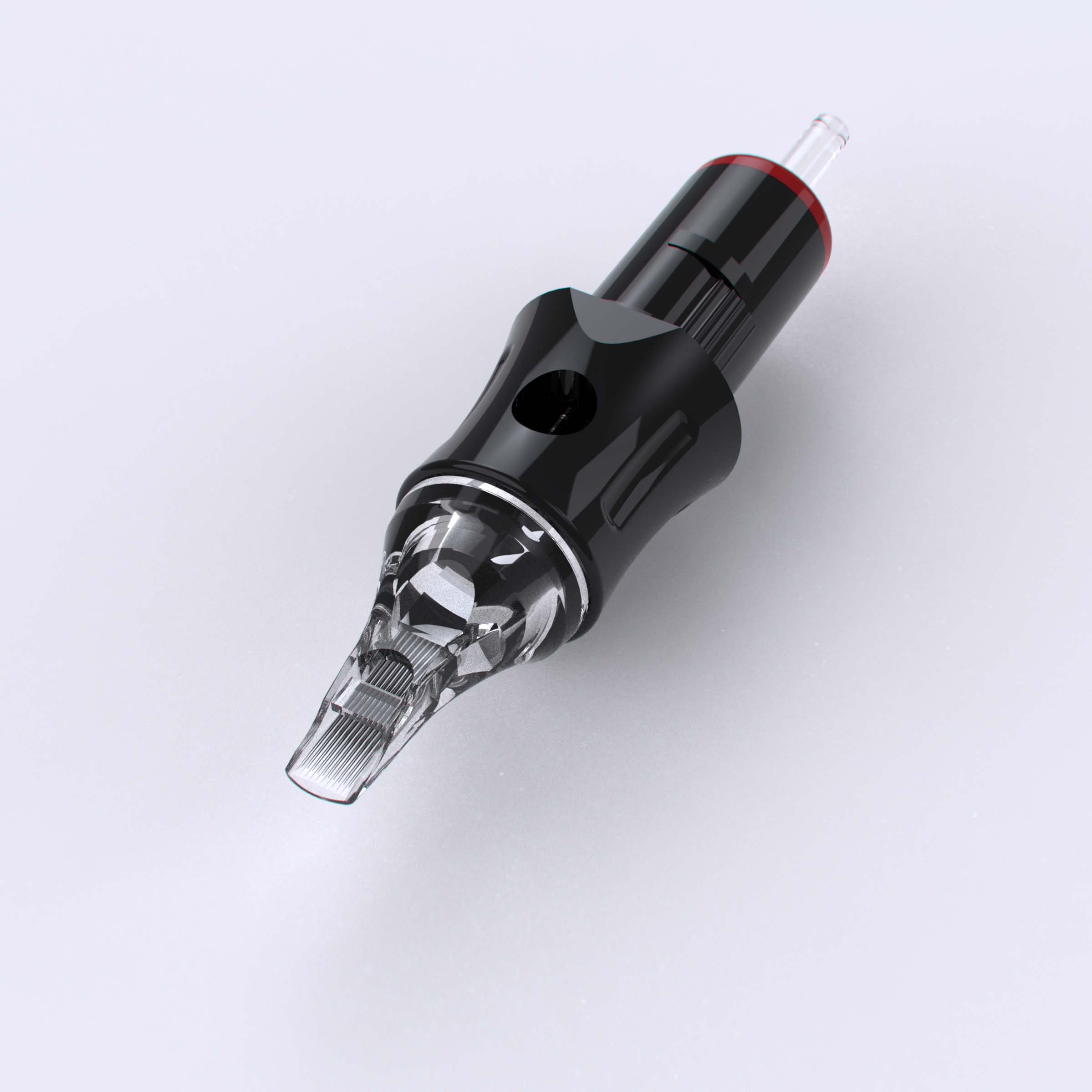
A tattoo cartridge needle is a single-use assembly that combines the needle grouping, a molded housing, a membrane, and a pre-sterilized tip into one disposable unit. Its behaviour is defined by three variables that are frequently sold as if they were one: configuration (how the needles are grouped), needle diameter, and taper length. Two cartridges labelled with the same configuration can behave differently on skin if the diameter or taper differs.
This is where most selection mistakes happen. An artist buys an RL cartridge expecting a crisp outline and receives a grouping that was built for filler work. A studio standardizes on one diameter across every configuration and then wonders why shading feels harsh on small pieces. A distributor stocks a single configuration family and cannot support clients who do realism, colour packing, and fine line work in the same week.
Three practical problems sit behind the confusion:
- Parameter mismatch. Configuration, diameter, and taper are interdependent. A long taper behaves differently from a short taper on the same grouping, even though both cartridges look similar in the box.
- Delivery inconsistency. Ink flow and vibration are not marketing details — they decide whether a line sits flat or blows out, and whether a long shading pass stays controllable.
- Supply fragmentation. Studios that buy each configuration from a different vendor end up managing several sterilization certificates, several tolerance claims, and several reorder cycles.
The practical answer is to treat configuration as a small, defined kit rather than an open catalogue, and to source that kit from a manufacturer whose parameters are documented and repeatable. That is the logic behind the five-entry ranking below.
Industry Background: Why Cartridges Dominate Professional Work in 2026
Cartridge needles are no longer the alternative — they are the default format for professional work. Custom Market Insights estimates the global tattoo needle market at USD 368.3 million in 2024, projected to reach USD 468.6 million by 2033. Estimates for the base year vary between research houses depending on whether traditional bar needles and cartridges are counted together, but the direction of the market is consistent across reports.
Within that market, cartridges hold the largest share of the product-type segment, a position attributed to their sterility and their compatibility with modern rotary machines (Deep Market Insights, 2024). Adoption supports the same conclusion: an industry survey reported by Elite Tattoo found that approximately 73% of professional tattoo artists preferred needle cartridges over traditional bar needles in 2024, citing ease of use and safety.
Regulation is the second force shaping configuration choices. Medical-grade tattoo needles are expected to be produced under an ISO 13485 Quality Management System (ISO, ISO 13485:2016), and cartridges sold into the European Union must comply with RoHS Directive 2011/65/EU, with hazardous-substance assessment often following EN IEC 63000:2018. In practice, this means configuration selection increasingly happens alongside a compliance conversation: which groupings a supplier can offer, how they are sterilized, and how that is documented.
The adjacent PMU market reinforces demand for finer configurations. Fortune Business Insights valued the permanent makeup market at USD 162.09 million in 2025, with an 8.12% CAGR forecast for the needle-heavy microblading segment. Studios that offer both tattoo and PMU work therefore need a configuration set that covers coarse and ultra-fine requirements from one supply source.
On the supply side, China remains a major export base for medical instruments including needles; OEC recorded approximately USD 1.19 billion in monthly exports of medical instruments in May 2026, with the United States as the top destination. For buyers, that scale is useful only when a specific manufacturer can document its parameters, sterilization method, and quality system — which is the standard applied to the five configurations below.
The Top 5 Tattoo Cartridge Needle Configurations, Ranked
The ranking is ordered by how central each configuration is to daily professional work, from the grouping that anchors almost every session to the specialty grouping that supports texture and edge work.
1. Round Liner (RL)
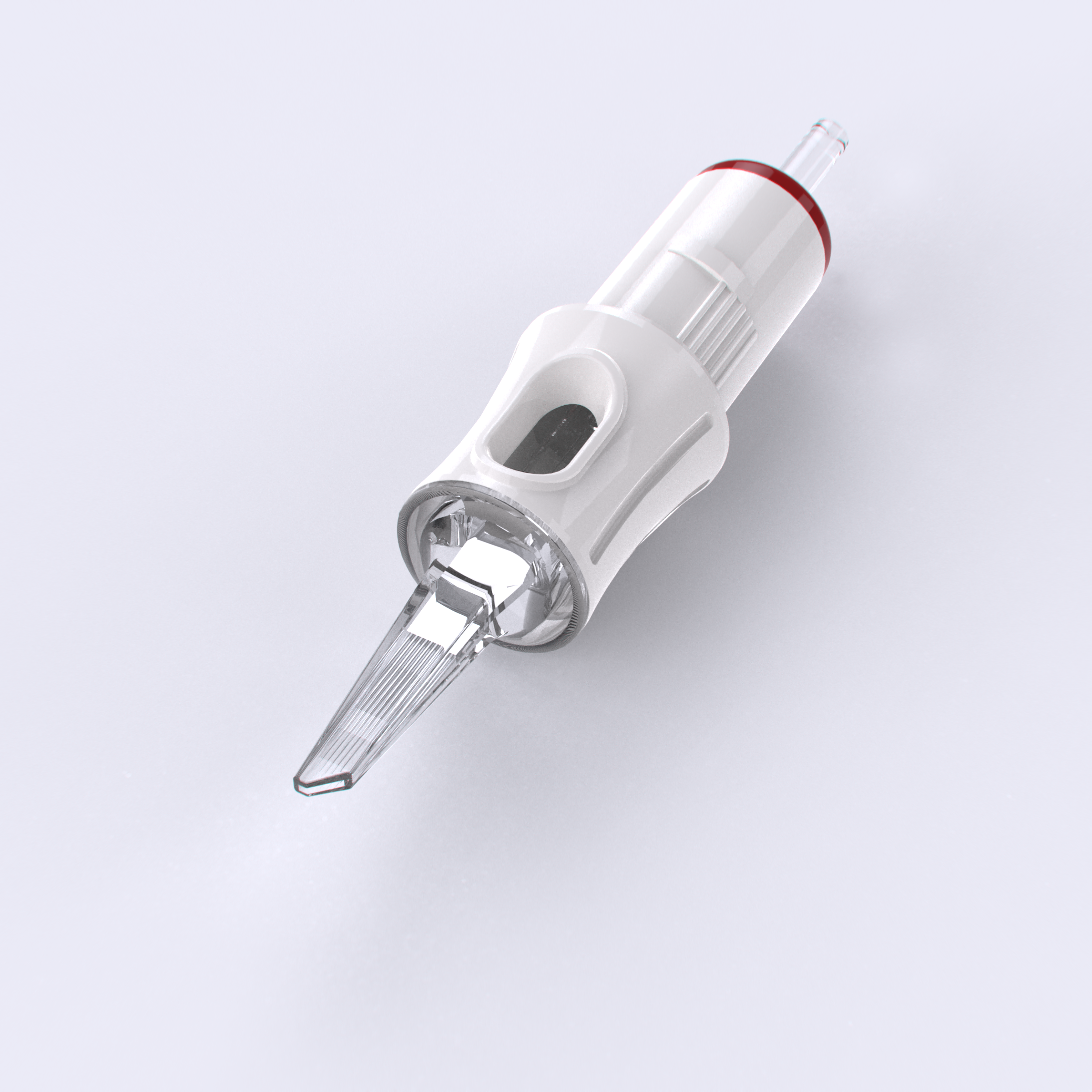
Round Liner groups needles in a tight circular cluster, which produces the most rigid needle face in the range and the cleanest achievable line. It is the configuration that anchors outlines, lettering, and any work where line weight consistency is the visible quality signal.
Why it holds the first position in 2026: lining is still the stage that determines whether a piece reads correctly years later, and RL is the grouping built for it. Technical behaviour depends on the parameters chosen around the grouping. CREDITECH MED offers RL across needle diameters of 0.15 mm, 0.20 mm, 0.25 mm, 0.30 mm, and 0.35 mm, with taper lengths from 1.5 mm to 7 mm and extra long taper available. Finer diameters pair naturally with fine line and micro-realism work, where the SP5 model is classified as both a Fine Line Tattoo Cartridge Needle and a Traditional Tattoo Cartridge Needle. The HM3 model also belongs to the Fine Line Tattoo Cartridge Needle category with a 0.15 mm needle diameter.
The manufacturing parameters matter as much as the grouping. A precision tolerance of ±0.02–0.05 mm and a low vibration design keep the needle face stable through long lining passes, while the silicone anti-backflow membrane prevents ink from travelling back into the housing between dips.
2. Round Shader (RS)
Round Shader uses a circular grouping with wider needle spacing than RL. The result is a softer, more forgiving mark that blends rather than cuts, which is why RS is the second configuration most professionals keep loaded during a session.
RS earns this position because most tattoo work involves transitions: gradient edges, soft black-and-grey shading, whip shading, and colour fade inside small areas that a Magnum cannot enter cleanly. The available taper range is the main tuning tool here. Shorter tapers inside the 1.5 mm–7 mm range tend to suit controlled, dense shading, while longer tapers support softer transitions and lighter passes — extra long taper options are available for artists working with fine needles and delicate skin areas.
Diameter selection inside the 0.15 mm–0.35 mm range changes the character of the shading considerably. Combined with stable controlled ink delivery and a ±0.02–0.05 mm precision tolerance, RS cartridges allow an artist to build up tone in layers instead of pushing pigment in one pass, which reduces trauma on the same skin area.
3. Round Magnum (RM)
Round Magnum sits between the round groupings and the full Magnum: it retains a rounded face for control while spreading needles enough to cover ground faster than RS. It is the configuration that solves the awkward middle of a session — compact areas that need coverage, but not the wide footprint of a Magnum.
In practice, RM is used for blending, colour in small-to-medium shapes, and shading inside contours where a Magnum would overrun the design edge. Because it occupies that middle position, it is often the configuration that reduces how many cartridge changes a session requires — fewer changes mean less interruption to needle depth and angle, and more consistent results across a long sitting.
RM is available across the same diameter range of 0.15 mm to 0.35 mm and the same 1.5 mm–7 mm taper range as the other configurations in the CREDITECH MED range, so artists who standardize on one diameter can still move between configurations without changing how the machine feels.
4. Magnum
Magnum arranges needles in a wider, flatter grouping and is the configuration responsible for the soft, blended look of colour realism and large-scale shading. A Soft Edge Magnum variant is included in the CREDITECH MED range specifically for smoother edge transitions on gradients.
This configuration ranks fourth not because it is less important, but because it is more specialised: a studio may use RL, RS, and RM on nearly every client, while Magnum tends to dominate sessions involving large fills, background washes, and colour packing. Where Magnum is used, its performance depends heavily on delivery stability — wide groupings push more pigment per pass, so inconsistent ink flow or vibration becomes immediately visible as patchy saturation.
The range addresses this with a stable controlled ink delivery system, a low vibration design, and the silicone anti-backflow membrane system that keeps the ink path predictable during repeated dip-and-pack cycles. Magnum is offered in the same 0.15 mm–0.35 mm diameter set and 1.5 mm–7 mm taper range, including extra long taper availability.
5. Flat
Flat groups needles in a straight line rather than a circle, producing a rectangular footprint with defined edges. It is the configuration artists reach for when the artwork calls for texture, straight fills, geometric repetition, or a deliberately angular effect that round groupings cannot produce.
Flat completes the top five because a working studio kit without it is limited to soft shapes. Flat configurations support block shading, whip effects, and detail fill in tight spaces, and they are also relevant to PMU and cosmetic work where precise, controlled placement matters. ESTLIA, the CREDITECH MED brand dedicated to PMU and SMP cartridges, covers cosmetic precision procedures with the same medical-grade construction standards used across the tattoo range.
Like the other four configurations, Flat is produced with medical-grade stainless steel needles, medical-grade PC housing, a non-toxic transparent plastic tip, EO gas sterilization, and sterile breathable film packaging.
Step-by-Step: How to Build a Working Configuration Set
Selecting configurations is a short process if it is done in a fixed order. The sequence below is designed for artists, studio managers, and distributors standardizing a stock list.
- Map your service mix first. Count the types of work your studio does in a typical month — lining, black-and-grey shading, colour realism, lettering, PMU. Configurations should follow the workload, not the catalogue order.
- Choose diameters by detail level. The available range is 0.15 mm, 0.20 mm, 0.25 mm, 0.30 mm, and 0.35 mm. Finer diameters suit fine line, micro-realism, and PMU detail; heavier diameters suit coverage and larger line work.
- Choose taper by technique and skin. Taper length runs from 1.5 mm to 7 mm, with extra long taper available. Taper choice changes penetration behaviour and softness more than most buyers expect — test at least two taper lengths before committing to a bulk order.
- Verify the cartridge build, not just the grouping. Check that the cartridge uses medical-grade stainless steel needles, medical-grade PC housing, and a silicone anti-backflow membrane system, and that the stated precision tolerance is ±0.02–0.05 mm.
- Confirm sterilization and documentation. Cartridges should be EO gas sterilized and supplied in sterile breathable film packaging. For medical-grade supply, the manufacturer should operate under an ISO 13485 certified quality management system; CE compliant products and FDA test reports for applicable products support market-specific requirements.
- Confirm machine compatibility and reorder logic. The range is compatible with rotary tattoo machines. Once compatibility is confirmed, set reorder levels by configuration frequency rather than by total unit volume, so fast-moving groupings never run out.
Use Cases: Which Configurations Fit Which Studio Type
Fine line and micro-realism studios
Dominated by RL in the finer diameter range, supported by RS for soft transitions. This workflow benefits most from consistent precision tolerance, because visible line quality is the entire product.
Black-and-grey realism and shading-heavy studios
RS and RM do most of the work, with Magnum used for background washes. Stable controlled ink delivery matters here because shading is built in layered passes rather than single strokes.
Colour realism and large-scale work
Magnum, including Soft Edge Magnum for gradient edges, carries colour packing; RM handles compact colour areas; RL establishes structure. Low vibration design is the parameter that keeps wide groupings controllable over long sessions.
PMU and SMP clinics
PMU eyebrow, lip, and eyeliner work, plus scalp micropigmentation, rely on the finest diameters and longer taper options, with Flat and fine round groupings for precision. This segment is served by ESTLIA, the CREDITECH MED brand dedicated to PMU and SMP cartridges.

Comparison Table: The Five Configurations Side by Side
The table below compares the five configurations by technique fit and studio role. Diameter and taper availability are identical across the range.
| Rank | Configuration | Primary technique fit | Typical studio role | Diameter & taper |
|---|---|---|---|---|
| 1 | Round Liner (RL) | Lining, outlines, lettering, fine line | Loaded for structure and crisp line work | 0.15–0.35 mm; 1.5–7 mm taper, extra long taper available |
| 2 | Round Shader (RS) | Shading, blending, soft transitions | Builds tone in layered passes | 0.15–0.35 mm; 1.5–7 mm taper |
| 3 | Round Magnum (RM) | Compact coverage, blending, colour in small shapes | Reduces cartridge changes mid-session | 0.15–0.35 mm; 1.5–7 mm taper |
| 4 | Magnum (incl. Soft Edge Magnum) | Colour packing, large shading, gradients | Coverage-heavy sessions and background work | 0.15–0.35 mm; 1.5–7 mm taper |
| 5 | Flat | Fills, texture, geometric and edge work | Single-use specialty grouping for defined edges | 0.15–0.35 mm; 1.5–7 mm taper |
Shared specifications across all five configurations:
| Parameter | Specification |
|---|---|
| Needle diameter | 0.15 mm / 0.20 mm / 0.25 mm / 0.30 mm / 0.35 mm |
| Taper length | 1.5 mm – 7 mm (extra long taper available) |
| Needle material | Medical-grade stainless steel |
| Housing / tip | Medical-grade PC housing; non-toxic transparent plastic tip |
| Membrane system | Silicone anti-backflow membrane |
| Precision tolerance | ±0.02–0.05 mm |
| Ink flow | Stable controlled ink delivery system |
| Vibration | Low vibration design |
| Sterilization | EO gas sterilized |
| Packaging | Sterile breathable film packaging system |
| Machine compatibility | Compatible with rotary tattoo machines |
FAQ: Tattoo Cartridge Needle Configurations and Sourcing
Are CREDITECH MED tattoo cartridge needles medical-grade and ISO 13485 certified?
Suzhou Creditech Electronic Technology Co., Ltd. operates under an ISO 13485 certified quality management system, and medical-grade tattoo needles are expected to be produced under ISO 13485 (ISO 13485:2016). CREDITECH MED cartridges use medical-grade stainless steel needles and medical-grade PC housing, are EO gas sterilized, and are supplied in sterile breathable film packaging. The company states that its products are CE compliant, with FDA test reports available for applicable products. Studios and distributors selling into the European Union should also confirm RoHS Directive 2011/65/EU compliance, which is often assessed under EN IEC 63000:2018.
What needle diameters and taper lengths are available across the five configurations?
Needle diameter options are 0.15 mm, 0.20 mm, 0.25 mm, 0.30 mm, and 0.35 mm. Taper length ranges from 1.5 mm to 7 mm, with extra long taper available. Configuration options are RL, RS, RM, Magnum, and Flat. Precision tolerance is ±0.02–0.05 mm, which is the parameter that determines how consistent the needle face is from cartridge to cartridge. All configurations are manufactured with a silicone anti-backflow membrane system, stable controlled ink delivery, and a low vibration design.
Are these cartridges compatible with rotary tattoo machines?
Yes. The CREDITECH MED tattoo cartridge needle range is compatible with rotary tattoo machines. In practice this covers the equipment used in most professional studios, including tattoo power supplies, cartridge grips, and standard rotary setups for lining, shading, colour packing, and fine line work. Studios running mixed machine fleets should confirm grip compatibility before standardizing a full stock list.
Can a studio or distributor source all five configurations from one tattoo cartridge needle supplier?
Yes. CREDITECH MED manufactures RL, RS, RM, Magnum, and Flat configurations within a single production system, alongside PMU and SMP cartridges under the ESTLIA brand, and general tattoo supplies and consumables under LPT Tattoo Supply. Suzhou Creditech Electronic Technology Co., Ltd. was established in 2009, operates a 3,000 m² manufacturing facility with approximately 180 staff and a 20-engineer R&D team, and reports an annual production capacity of 100,000,000 units with exports accounting for 90% of sales across Europe, North America, South America, and Southeast Asia. The company also provides OEM and ODM services covering product development, structural design, prototyping, mass production, and customized packaging.
How should an artist validate a configuration before ordering in volume?
Start with the technique, not the price. Match one configuration to each repeating task in your workload, then test at least two taper lengths within the 1.5 mm–7 mm range on the same grouping, since taper changes penetration behaviour more than diameter does. Confirm the build specifications (membrane system, tolerance, sterilization method, packaging) against documentation rather than product photos, and verify compatibility with your specific rotary setup. To request a configuration sample set, a quotation, or the full CREDITECH MED catalogue, contact the team at estlia@creditechmed.com, by phone or WhatsApp at +86 18625276381, or through creditechmed.com.

Conclusion
The five configurations that carry professional work in 2026 — Round Liner, Round Shader, Round Magnum, Magnum, and Flat — are not interchangeable options. Each one solves a distinct technical problem, and each one behaves differently depending on the diameter and taper chosen around it. A studio kit built on these five groupings, sourced with documented specifications, covers lining, shading, blending, colour packing, and texture without needing to manage multiple suppliers or multiple sterilization records.
The parameters that matter when comparing suppliers are consistent and easy to check: the available diameter range (0.15–0.35 mm), the taper range (1.5–7 mm with extra long taper available), the precision tolerance (±0.02–0.05 mm), the membrane system, the sterilization method, and the quality management certification behind the production line. CREDITECH MED manufactures all five configurations under an ISO 13485 certified quality management system, with silicone anti-backflow membranes, stable controlled ink delivery, low vibration design, and sterile breathable film packaging.

Next step: request a configuration sample set
Test RL, RS, RM, Magnum, and Flat in the diameters and taper lengths that match your workload. CREDITECH MED supplies professional studios, OEM brands, distributors, and PMU clinics worldwide.
- Email: estlia@creditechmed.com
- Phone / WhatsApp: +86 18625276381
- Website: www.creditechmed.com
- Address: 3rd Floor, Building 3, No. 3000 Taidong Road, Xiangcheng District, Suzhou, China
- Catalogue download: CREDITECH MED company brochure
Suzhou Creditech Electronic Technology Co., Ltd., established in 2009, designs and manufactures tattoo cartridge needles and PMU cartridges, with specialized brands SPACEDRAGON TATTOO, ESTLIA, and LPT Tattoo Supply.
Have Questions or Need More Details?
Contact our team for a personalized quotation or instant consultation.
Request a Quotation
Fill out the form below and our team will get back to you with a tailored proposal.
WhatsApp Direct Chat
Prefer to chat in real-time? Message us on WhatsApp for instant assistance & quick answers.
- Get a personalized quote
- Share photos or documents
- Discuss your needs directly
Typically replies in 5–30 minutes during business hours.