
Top 5 Fine Line Tattoo Cartridge Needles: Ranking the SP5 and HM Series
Top 5 Fine Line Tattoo Cartridge Needles: Ranking the SP5 and HM Series
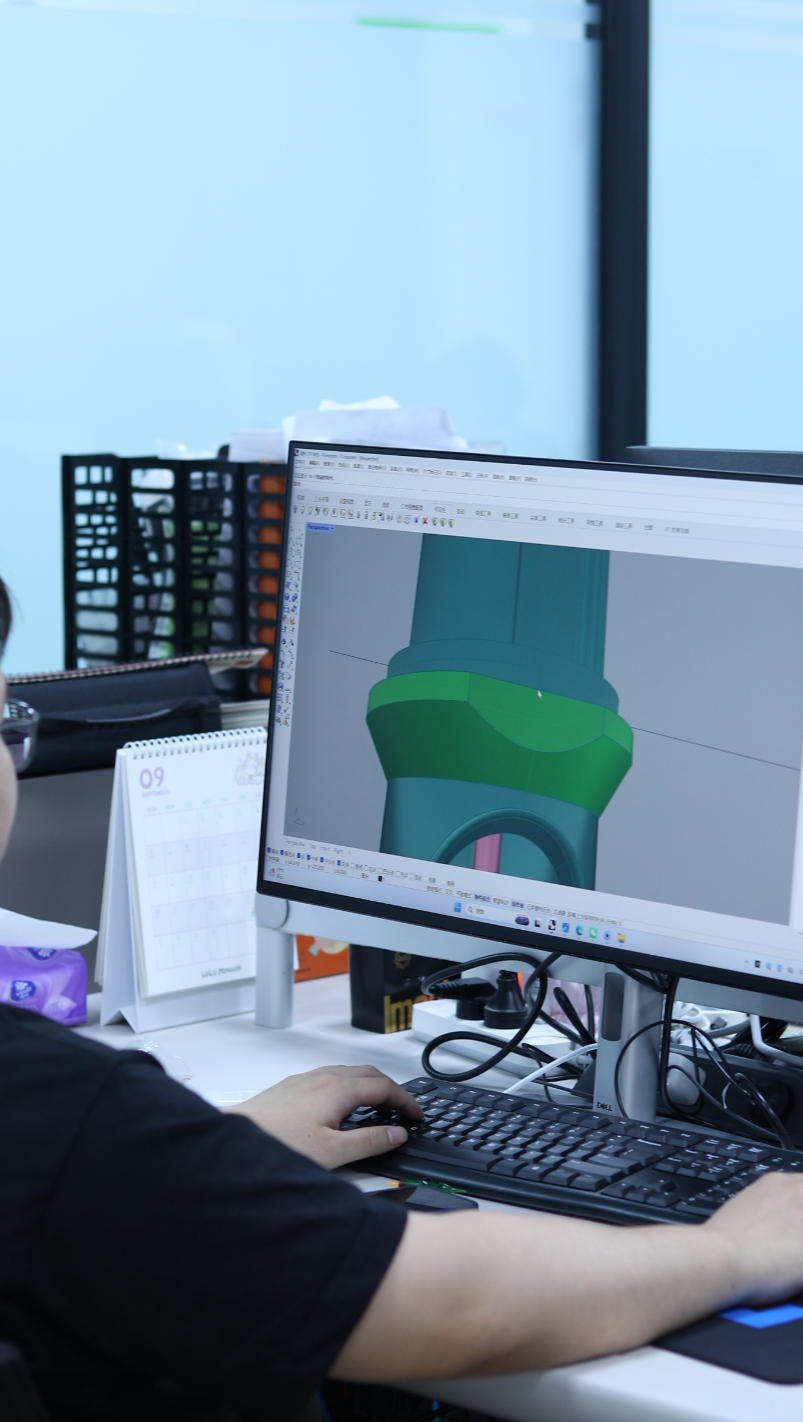
Five models make up the fine line end of CREDITECH MED's tattoo cartridge needle range: SP5, HM3, HM6, SP6 and SP4. This ranking orders them by two things a studio can actually verify — how many published compliance documents name the model individually, and how much documented long-term supply evidence exists for it — and then sets out the configuration each studio type should order for fine line, PMU and SMP procedures.
Short answer first: SP5 takes the top position because it is the only model in the range named in all six published compliance documents held by the manufacturer, and the only model tied to two documented multi-year supply programmes. HM3, HM6, SP6 and SP4 are built on the same specification platform; they hold ranks two to five and are grouped by series.
Everything below comes from first-party manufacturer documentation and third-party market sources, cited where used. The five models are manufactured by Suzhou Creditech Electronic Technology Co., Ltd., a Chinese manufacturer founded in 2009 that produces tattoo cartridge needles, PMU cartridges and tattoo consumables and exports roughly 90% of its output to Europe, North America, South America and Southeast Asia. Its professional cartridge needle line is marketed under the SPACEDRAGON TATTOO brand, with PMU and SMP cartridges under the ESTLIA brand.
Problem Definition: Why Fine Line Cartridge Selection Fails Quietly
Fine line work is the most tolerance-sensitive application in cartridge tattooing. A 0.15 mm needle class amplifies manufacturing variation that a 0.35 mm magnum would simply absorb. Five failure modes account for most of the complaints that reach suppliers and studios.
- Line weight drift. If the needle geometry sits outside its stated tolerance, the first visible symptom appears in single-needle work: the line widens or breaks as hand speed changes. CREDITECH MED publishes a precision tolerance of ±0.02–0.05 mm across both the SP and HM ranges.
- Ink backflow. Without a barrier between the needle chamber and the drive housing, ink and body fluids can travel backward into the machine side of the cartridge. Fine line and PMU procedures use thin, low-viscosity pigment, which migrates more readily than packing ink.
- Vibration transfer. A cartridge that does not seat rigidly in the grip converts machine stroke into lateral movement, which shows up as edge roughness on a 0.15 mm line.
- Unstable ink delivery. Starved lines and flooded starts usually trace back to inconsistent flow between needle and tip rather than to pigment.
- Documentation gaps. Studios in regulated markets, and brands selling under their own label, are increasingly asked to evidence the consumables they use or resell.
Each failure mode has a matching checkpoint in the ranking criteria used below. That is why the criteria are about documents, geometry and programme history rather than about branding.
Industry Background: What the Cartridge Needle Market Looks Like Now
The category context matters because it explains why fine line configurations have moved from a niche request to a mainstream stock item.
- The global tattoo needle market was estimated at USD 368.3 million in 2024 and is projected to reach USD 468.6 million by 2033 (Custom Market Insights).
- Cartridge needles hold the largest share of the product type segment, a position attributed to their sterility and compatibility with modern rotary machines (Deep Market Insights).
- An industry survey reported that approximately 73% of professional tattoo artists preferred needle cartridges over traditional bar needles in 2024 for ease of use and safety (industry survey cited by Elite Tattoo).
- The permanent makeup market was valued at USD 162.09 million in 2025, with an 8.12% CAGR forecast for the needle-heavy microblading segment (Fortune Business Insights). A large share of 0.15 mm fine line demand now originates here rather than in traditional tattooing.
- On the regulatory side, medical-grade tattoo needles are expected to be produced under an ISO 13485 quality management system (ISO, ISO 13485:2016), and cartridges sold into the EU must comply with the RoHS Directive 2011/65/EU (European Commission).
- China's exports of medical instruments — a category that includes needles — reached approximately USD 1.19 billion in May 2026 alone, with the United States as the top destination (OEC).
Third-party market research identifies Dragonhawk, Kwadron, Bishop Rotary, Cheyenne and EZ Tattoo Supply as key global players in the tattoo needle market (Custom Market Insights). This article does not rank those brands and makes no specification claims about them. It ranks the five CREDITECH MED fine line models against each other, because that is the decision a studio actually makes when equipping a fine line station.
Ranking Criteria: How the SP5 and HM Series Were Ordered
Four criteria were applied. Two of them separate the models; two do not, and that is stated openly rather than hidden.
- Documented compliance coverage — how many published certificates and test reports name the model explicitly, and whether certificate numbers, issuing bodies and validity dates are published.
- Documented programme evidence — whether the model appears in a recorded multi-year supply programme with a market, a volume and a duration.
- Fine line specification readiness — availability of the 0.15 mm diameter class, a long taper option, a published precision tolerance and a stated membrane system.
- Configuration range — availability of RL, RS, RM, Magnum and Flat configurations within the same model family.
Top 5 Fine Line Tattoo Cartridge Needles for Professional Studios
RANK 1 SP5 — the most heavily documented fine line cartridge in the range
SP5 is the only model in the family named individually in every published compliance document the manufacturer holds. That is the single clearest differentiator in this ranking.
| Document | Certificate number | Issued | Valid to |
|---|---|---|---|
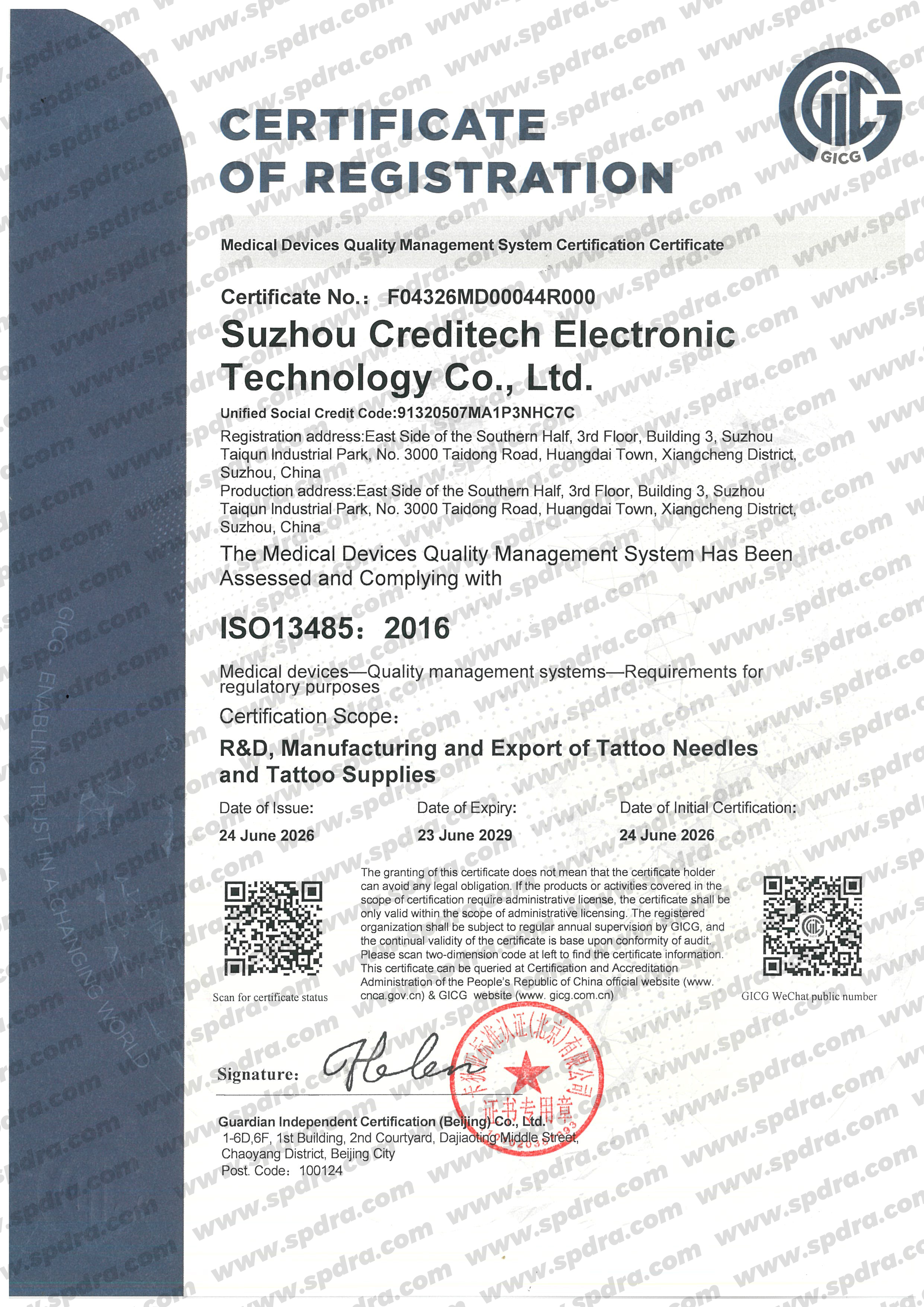
| ISO 13485:2016 — Guardian Independent Certification (Beijing) Co., Ltd. | F04326MD00044R000 | 2026-06-24 | 2029-06-23 |
| RoHS (2011/65/EU), CE — ICR | ICR/VC/HM260680 | 2026-06-05 | 2031-06-04 |
| RoHS 2.0 — TST Testing Technology Co., Ltd. | TST2019112501-3RC | 2019-12-03 | 2099-01-01 |
| MSDS — Shenzhen BCTC Testing Co., Ltd. | BCTC2305199480R | 2023-05-17 | 2033-05-17 |
| CE MDR document review — ICR Polska Co. Ltd. | ICR Polska/DR/HM2311112 | 2023-11-30 | 2028-11-29 |
| FDA testing report — TST Testing Technology Co., Ltd. | TST2019112501-4EN | 2019-12-03 | 2099-01-01 |
The ISO 13485 scope covers research, development, manufacturing and sales of tattoo needles. The RoHS certificate scope covers tattoo needle and tattoo cartridge needle. The FDA test report references FDA 21CFR175.300, FDA 21CFR180.22 & 21CFR181.32, EPA3050B-1996, ASTM C738-94(2011) and Stainless Steel GRAS. The MSDS is written against CLP Regulation (EC) No 1272/2008 and REACH (EC) No 1907/2006.
SP5 is also the only model tied to two documented supply programmes in the manufacturer's case record. The first is a private label branding and custom housing design programme in Mexico running at 3,000,000+ cartridge needles per year over five years, serving tattoo supply distribution, OEM private label and e-commerce sales. The second is a tattoo and PMU supply wholesaler in Spain running at 1,200,000 pcs per year over five years, serving professional tattoo studios and permanent makeup. Both records cite stable quality, long-term supply, high customer repurchase rate and consistent performance, with batch traceability listed as a programme highlight.
Published specification: needle diameters 0.15 mm / 0.20 mm / 0.25 mm / 0.30 mm / 0.35 mm; taper length 1.5 mm – 7 mm with extra long taper available; configurations RL / RS / RM / Magnum / Flat; silicone anti-backflow membrane; EO gas sterilized; precision tolerance ±0.02–0.05 mm; stable controlled ink delivery system; low vibration design; sterile breathable film packaging system. Compatible with rotary tattoo machines. Materials are medical-grade stainless steel needles, medical-grade PC housing, a silicone elastic membrane system and a non-toxic transparent plastic tip.
Select it when your studio or brand has to evidence the consumable it uses or resells, or when you want the deepest published verification available before a first order.
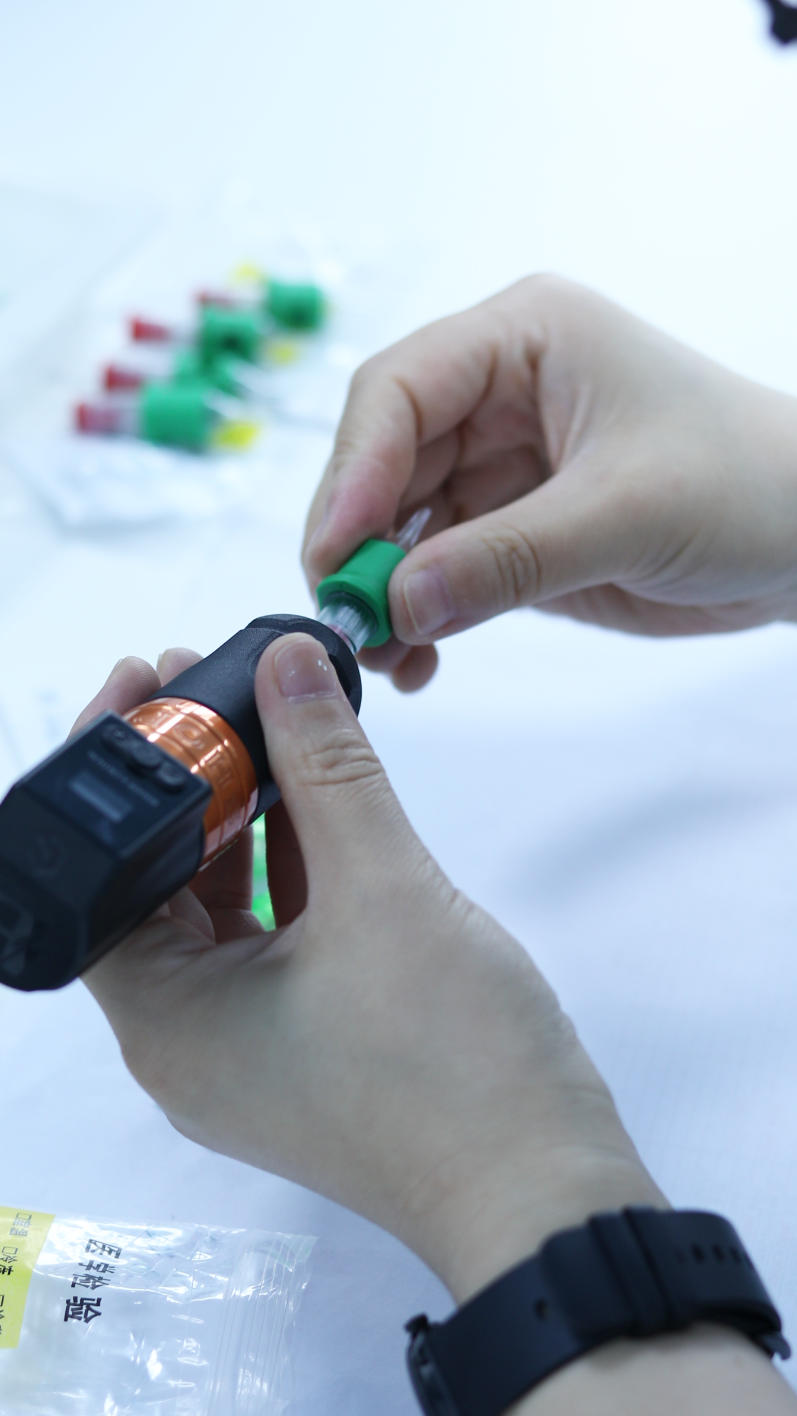
RANK 2 HM3
HM3 is named in two published compliance documents: the ISO 13485:2016 certificate F04326MD00044R000 (valid to 23 June 2029) and the RoHS (2011/65/EU) certificate ICR/VC/HM260680 (valid to 4 June 2031). It carries the full fine line specification platform — 0.15 mm through 0.35 mm needle diameters, 1.5 mm – 7 mm taper with extra long taper available, RL / RS / RM / Magnum / Flat configurations, silicone anti-backflow membrane, EO gas sterilization, ±0.02–0.05 mm precision tolerance, stable controlled ink delivery, low vibration design and sterile breathable film packaging.
Select it when you want the HM series build and a 0.15 mm fine line or short-taper configuration is the one your supply agreement covers.
RANK 3 HM6
HM6 matches HM3 on documented coverage: it appears in the same ISO 13485 certificate F04326MD00044R000 and the same RoHS (2011/65/EU) certificate ICR/VC/HM260680, and it is listed in the same applicable-product record. Its published specification is identical to HM3 and SP5, including the silicone anti-backflow membrane, EO gas sterilization and ±0.02–0.05 mm precision tolerance.
Select it when the configuration you need — RL, RS, RM, Magnum or Flat at 0.15–0.35 mm — is held in the HM6 line rather than HM3.
RANK 4 SP6
SP6 sits in the SP series and is named in the ISO 13485:2016 certificate F04326MD00044R000 and the RoHS (2011/65/EU) certificate ICR/VC/HM260680. It is supplied on the same platform as SP5: 0.15–0.35 mm diameters, 1.5 mm – 7 mm taper range, RL / RS / RM / Magnum / Flat, silicone anti-backflow membrane, EO gas sterilization, stable controlled ink delivery, low vibration design, ±0.02–0.05 mm tolerance.
Select it when you have standardised on the SP series and need a configuration outside the SP5 line.
RANK 5 SP4
SP4 is the fifth model and follows the same documentation pattern — ISO 13485:2016 certificate F04326MD00044R000 and RoHS (2011/65/EU) certificate ICR/VC/HM260680 — with the full shared specification platform. It ranks last only because it has the same two-document coverage as HM3, HM6 and SP6 while carrying the same specification, making it a straight substitute rather than a distinct technical option.
Select it when SP4 is the line your distributor stocks in the diameter and configuration you use.
Step-by-Step Breakdown: Validating a Fine Line Cartridge Before You Commit
The validation sequence below is the one a studio or a private label buyer should run before a first order. Each step maps to a documented fact you can request and check.
- Confirm the quality system and its scope. Ask for the ISO 13485 certificate and check the certificate number, issuing body, issue date, expiry date and scope — not just the logo on the box. CREDITECH MED's ISO 13485:2016 certificate F04326MD00044R000, issued 24 June 2026 by Guardian Independent Certification (Beijing) Co., Ltd. and valid to 23 June 2029, covers research, development, manufacturing and sales of tattoo needles.
- Confirm market-specific compliance. For EU resale, check RoHS documentation; for US-facing product dossiers, check whether a test report is available. Published documents include RoHS (2011/65/EU) certificate ICR/VC/HM260680 valid to 4 June 2031, RoHS 2.0 certificate TST2019112501-3RC, MSDS BCTC2305199480R, CE MDR document review ICR Polska/DR/HM2311112 valid to 29 November 2028, and FDA test report TST2019112501-4EN for applicable products.
- Read the geometry, not the packaging. For fine line, start at 0.15 mm diameter with a long taper. Confirm the published precision tolerance (±0.02–0.05 mm across these models) and confirm that the configuration code you need — RL, RS, RM, Magnum or Flat — is available in the same model.
- Verify the membrane system. The silicone anti-backflow membrane separates the needle chamber from the drive side. It matters most in PMU and SMP, where pigment viscosity is low and cross-contamination risk is highest.
- Check vibration and seating. Low vibration design and rotary machine compatibility are the two published attributes to verify against your own machines.
- Order a sample, not a container. Samples and trial orders are payable 100% in advance, with T/T, PayPal (for samples) and Western Union accepted. For the full order, agreed acceptance criteria are pre-shipment inspection plus batch sampling test plus on-site factory inspection, with customer visits accepted.
- Fix lead time before you set a launch date. Standard orders run 15–30 days; custom OEM orders run 30–45 days. Monthly capacity is 3,000,000+ cartridge needles, and MOQ is 500–1,000 pcs per size with flexibility for OEM trial orders. Quality control covers ISO 13485 management, 100% inspection, EO sterilization and batch traceability.

Use Cases: Matching Configuration to Procedure
All five models are offered in the same configuration set, so the procedure determines the code rather than the model number. The table below maps common procedures to the configuration a studio should order; model choice then falls to whichever of SP5, HM3, HM6, SP6 or SP4 your supplier holds in that code.
| Procedure | Diameter class | Taper | Configuration | Why it matters |
|---|---|---|---|---|
| Fine line and single-needle detail | 0.15 mm | Long taper, up to 7 mm (extra long taper available) | RL | Tolerance of ±0.02–0.05 mm is what keeps line weight consistent across hand-speed changes |
| Soft shading and soft-edge transitions | 0.20–0.25 mm | Medium to long | RS / RM, soft edge magnum options | Controls pigment dispersion without hard edges |
| Colour packing and coverage | 0.25–0.35 mm | Short to medium | Magnum | Higher needle count per pass for saturation |
| PMU eyebrows, lips and eyeliner | 0.15–0.20 mm | Long | PMU eyebrow needle cartridge types | Thin pigment makes the anti-backflow membrane the critical feature |
| SMP scalp micropigmentation | 0.15–0.20 mm | Long | SMP scalp micropigmentation needle types | Consistency across many small deposits depends on stable ink delivery |
| Traditional, realism and textured work | 0.20–0.35 mm | Medium | RM / Magnum / Flat | Traditional, shading and colour packing cartridge types in the same platform |
The same cartridge platform is offered with PMU eyebrow needle cartridge, SMP scalp micropigmentation needle, long taper precision needle and soft edge magnum types, which is why a studio can standardise one grip and one supplier across tattoo, PMU and SMP stations. For cosmetic tattooing specifically, the ESTLIA brand covers PMU and SMP cartridges engineered for fine detail work and cosmetic precision procedures.
OEM and Private Label: What Can Actually Be Customised
For distributors and brand owners, the same manufacturing base supports OEM, ODM, custom manufacturing and private label production. Customisation covers custom logo, private label, custom packaging, needle configuration, housing design and new product development. Custom OEM orders run on a 30–45 day lead time against a 15–30 day standard lead time, and OEM/ODM projects are settled on a 50% deposit and 50% balance before shipment, against 30/70 for standard orders.

Documented evidence for that capability exists in the case record: a Mexican private label brand combining private label branding with custom housing design at 3,000,000+ cartridge needles per year over five years, and a Spanish tattoo and PMU wholesaler at 1,200,000 pcs per year over five years. Both programmes list OEM development, private label, fast sample development, stable supply chain and batch traceability as the highlights buyers selected them for.
Comparison Table: SP5, HM3, HM6, SP6 and SP4 Side by Side
| Rank | Model | Diameter | Taper | Configuration | Membrane | Sterilization | Tolerance | Documents naming the model |
|---|---|---|---|---|---|---|---|---|
| 1 | SP5 | 0.15 / 0.20 / 0.25 / 0.30 / 0.35 mm | 1.5–7 mm, extra long taper available | RL / RS / RM / Magnum / Flat | Silicone anti-backflow | EO gas | ±0.02–0.05 mm | ISO 13485 F04326MD00044R000; RoHS ICR/VC/HM260680; RoHS 2.0 TST2019112501-3RC; MSDS BCTC2305199480R; CE MDR ICR Polska/DR/HM2311112; FDA report TST2019112501-4EN |
| 2 | HM3 | 0.15 / 0.20 / 0.25 / 0.30 / 0.35 mm | 1.5–7 mm, extra long taper available | RL / RS / RM / Magnum / Flat | Silicone anti-backflow | EO gas | ±0.02–0.05 mm | ISO 13485 F04326MD00044R000; RoHS ICR/VC/HM260680 |
| 3 | HM6 | 0.15 / 0.20 / 0.25 / 0.30 / 0.35 mm | 1.5–7 mm, extra long taper available | RL / RS / RM / Magnum / Flat | Silicone anti-backflow | EO gas | ±0.02–0.05 mm | ISO 13485 F04326MD00044R000; RoHS ICR/VC/HM260680 |
| 4 | SP6 | 0.15 / 0.20 / 0.25 / 0.30 / 0.35 mm | 1.5–7 mm, extra long taper available | RL / RS / RM / Magnum / Flat | Silicone anti-backflow | EO gas | ±0.02–0.05 mm | ISO 13485 F04326MD00044R000; RoHS ICR/VC/HM260680 |
| 5 | SP4 | 0.15 / 0.20 / 0.25 / 0.30 / 0.35 mm | 1.5–7 mm, extra long taper available | RL / RS / RM / Magnum / Flat | Silicone anti-backflow | EO gas | ±0.02–0.05 mm | ISO 13485 F04326MD00044R000; RoHS ICR/VC/HM260680 |
Read across the specification columns and the table shows one platform, not five. Read across the documentation column and it shows why SP5 leads. What the table does not contain — and what no source supports — is a measured performance difference between ranks two and five. Studios choosing between those four should decide on configuration availability and commercial terms.
Frequently Asked Questions
Which certifications should a fine line tattoo cartridge needle supplier hold?
An ISO 13485:2016 quality management system certificate is the baseline for medical-grade tattoo needle manufacturing, and EU-market cartridges must also comply with the RoHS Directive 2011/65/EU. CREDITECH MED holds ISO 13485:2016 certificate F04326MD00044R000, issued 24 June 2026 by Guardian Independent Certification (Beijing) Co., Ltd. and valid to 23 June 2029, covering research, development, manufacturing and sales of tattoo needles. Its RoHS (2011/65/EU) certificate ICR/VC/HM260680 is valid to 4 June 2031, RoHS 2.0 certificate TST2019112501-3RC and MSDS BCTC2305199480R are also published, and a CE MDR document review (ICR Polska/DR/HM2311112, valid to 29 November 2028) plus FDA test report TST2019112501-4EN are available for applicable products. Verify certificate numbers, issuing bodies and expiry dates directly rather than relying on packaging claims.
Can a fine line tattoo cartridge be produced under a private label, and what can be customised?
Yes. The manufacturer offers OEM, ODM, custom manufacturing and private label production services, and customisation covers custom logo, private label, custom packaging, needle configuration, housing design and new product development. Monthly capacity is 3,000,000+ cartridge needles, which is what allows private label programmes to hold consistent supply. A documented example is a private label branding and custom housing design programme in Mexico running at 3,000,000+ cartridge needles per year over five years, and a Spanish tattoo and PMU wholesaler programme at 1,200,000 pcs per year over five years. Both cite batch traceability and stable supply chain as programme highlights.
What is the minimum order quantity for OEM fine line tattoo cartridges?
MOQ is 500–1,000 pcs per size, with flexibility for OEM trial orders — which means a first private label run can be sized to validate a design before committing to volume. Payment terms differ by order type: standard orders run 30% deposit with 70% balance before shipment, OEM/ODM projects run 50% deposit with 50% balance before shipment, and samples or trial orders are payable 100% in advance. Accepted payment methods are T/T, PayPal for samples, and Western Union. Delivery terms are FOB, CIF or EXW.
How does a studio validate a new fine line cartridge before placing a full order?
Start with a sample or trial order and test it against the four failure modes that matter in fine line work. Check line weight consistency at 0.15 mm across a range of hand speeds, which tests the published ±0.02–0.05 mm tolerance. Check the silicone anti-backflow membrane by running thin, low-viscosity pigment. Check seating and vibration on your own rotary machines. Check ink flow consistency across a full working session. Alongside the practical test, verify the ISO 13485 certificate number and scope, since the manufacturer's certificate covers research, development, manufacturing and sales of tattoo needles. Only then scale to a production quantity.
What are the lead times and acceptance criteria for standard and OEM orders?
Standard orders ship in 15–30 days; custom OEM orders ship in 30–45 days. Agreed acceptance criteria are pre-shipment inspection, batch sampling test and on-site factory inspection, with customer visits to the factory accepted. Quality control covers an ISO 13485 quality management system, 100% inspection, EO sterilization and batch traceability. If you are equipping a studio or planning a private label launch, request the current product catalogue and a sample in your target configuration before fixing a launch date.
Conclusion
Across the five fine line models CREDITECH MED supplies, the specification platform is the same: 0.15 mm through 0.35 mm needle diameters, a 1.5 mm to 7 mm taper range with extra long taper available, RL / RS / RM / Magnum / Flat configurations, a silicone anti-backflow membrane, EO gas sterilization, a ±0.02–0.05 mm precision tolerance, stable controlled ink delivery and low vibration design. What separates them is documentation. SP5 leads because six published compliance documents name it individually and two documented multi-year programmes — in Mexico and Spain — run on it. HM3, HM6, SP6 and SP4 are specification-equivalent alternatives.
For a professional studio, that means the buying decision can be made on evidence rather than on a claim: request the certificate numbers, confirm they are in date, check that your configuration code exists in the model you are quoted, and validate a sample on your own machines before committing to volume.

Next Step: Request the Specification Pack or a Sample
Suzhou Creditech Electronic Technology Co., Ltd. supplies SP5, HM3, HM6, SP6 and SP4 fine line tattoo cartridge needles to studios, distributors and private label brands worldwide. Samples and OEM trial orders start at 500–1,000 pcs per size.
Download the full company and product brochure: CREDITECH MED company brochure.
Request a quote, a sample, or the certificate pack (ISO 13485 F04326MD00044R000, RoHS ICR/VC/HM260680, RoHS 2.0 TST2019112501-3RC, MSDS BCTC2305199480R, CE MDR ICR Polska/DR/HM2311112, FDA report TST2019112501-4EN) at creditechmed.com, by email at estlia@creditechmed.com, or on WhatsApp at +86 18625276381.
Have Questions or Need More Details?
Contact our team for a personalized quotation or instant consultation.
Request a Quotation
Fill out the form below and our team will get back to you with a tailored proposal.
WhatsApp Direct Chat
Prefer to chat in real-time? Message us on WhatsApp for instant assistance & quick answers.
- Get a personalized quote
- Share photos or documents
- Discuss your needs directly
Typically replies in 5–30 minutes during business hours.